


Mindfulness
Mindfulness is the practice of paying attention to the present moment with openness and without judgment, and its importance lies in how profoundly it reshapes our relationship with our own thoughts, emotions, and experiences. Instead of being pulled around by worries about the past or anxieties about the future, mindfulness anchors awareness in what is happening right now—where life is actually taking place. This shift creates mental space: thoughts are noticed rather than automatically believed, emotions are felt without being overwhelming, and reactions soften into considered responses.
Over time, mindfulness strengthens emotional regulation and resilience. By observing internal states as they arise, people become better able to recognize stress, cravings, or negative thought patterns early, before they escalate. This awareness supports healthier decision-making, reduces impulsive behavior, and lowers chronic stress by calming the nervous system. Mindfulness also enhances focus, patience, and compassion—both toward oneself and others—by encouraging curiosity instead of self-criticism.
At its core, mindfulness is a daily act of self-care and self-respect. It cultivates a grounded sense of presence that supports mental clarity, emotional balance, and overall well-being. In a world that constantly demands attention and speed, mindfulness offers a steady counterweight: a way to slow down, reconnect, and respond to life with intention rather than habit.
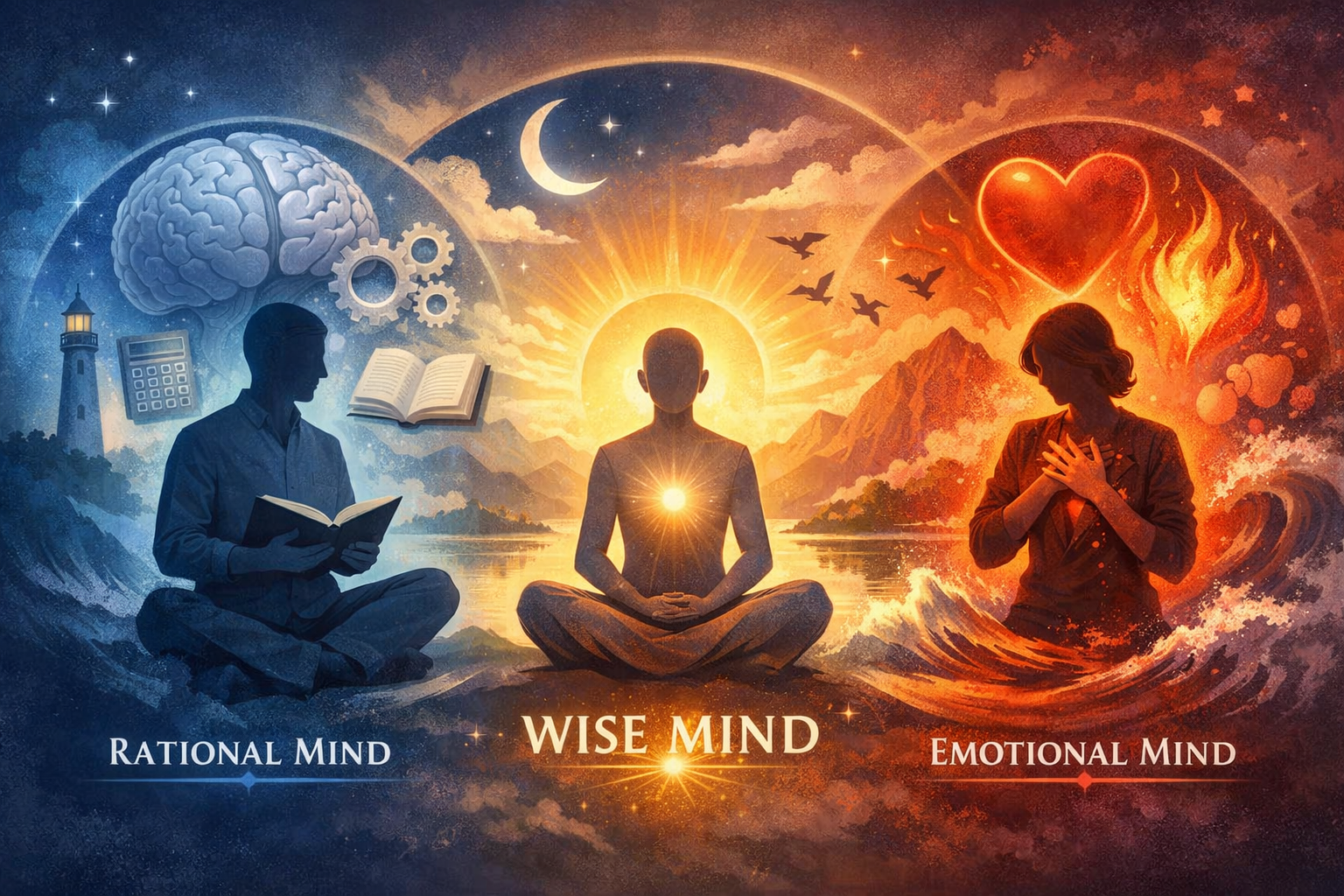
Wise Mind is the quiet meeting place between emotion and reason—the part of us that can feel deeply and think clearly at the same time. In Dialectical Behaviour Therapy, it’s described as the inner compass that emerges when Emotional Mind (driven by feelings, urges, and intensity) and Reasonable Mind (guided by logic, facts, and analysis) stop arguing and start cooperating. Wise Mind doesn’t ignore emotions, and it doesn’t let them take the wheel either; it listens, weighs, and responds with intention.
This state often shows up as a calm sense of “knowing.” Not loud, not dramatic—more like a steady signal beneath the noise. From Wise Mind, decisions tend to feel grounded rather than rushed, compassionate rather than reactive. It helps a person pause, notice what’s happening inside and around them, and choose actions that align with their values and long-term wellbeing.
Wise Mind isn’t something you live in permanently—it’s something you access. Mindfulness practices, slow breathing, and deliberate pauses create the conditions for it to surface. Over time, learning to recognize and trust Wise Mind builds emotional balance, resilience, and the ability to navigate difficult moments without being pulled to extremes. In a messy, complicated world, Wise Mind is how clarity learns to coexist with feeling.
In Dialectical Behaviour Therapy, the WHAT skills explain what you do to practice mindfulness. They are the concrete actions that help you step out of autopilot and into the present moment: Observe, Describe, and Participate.
To Observe is to notice what is happening without trying to change it. You pay attention to thoughts, emotions, body sensations, and your surroundings as they are, letting them come and go. This kind of observing is quiet and neutral—no judging, no fixing, just awareness.
To Describe is to put words to what you observe. You name experiences factually, such as “I’m noticing tension in my shoulders” or “There is a feeling of anxiety.” Describing helps organize experience and creates distance between you and intense emotions, making them easier to tolerate.
To Participate is to fully engage in the present moment. Instead of watching yourself from the outside or overthinking, you immerse yourself completely in what you’re doing. Participation brings a sense of flow, connection, and aliveness.
Together, the WHAT skills teach mindfulness as a lived practice, not a concept. They help you stay grounded in reality, reduce reactivity, and create space for Wise Mind to guide your choices—especially in difficult moments.
In Dialectical Behaviour Therapy, the HOW skills describe how you practice mindfulness. They shape the attitude you bring to the moment and determine whether mindfulness becomes grounding or frustrating. The HOW skills are Non-judgmentally, One-mindfully, and Effectively.
To act Non-judgmentally means noticing experiences without labeling them as good or bad, right or wrong. Thoughts, feelings, and sensations are observed as facts, not verdicts. This reduces emotional reactivity and softens self-criticism, creating space for understanding rather than blame.
To be One-mindful is to do one thing at a time with full attention. Instead of splitting your focus between the present and a running commentary in your head, you gently bring your awareness back to what you are doing right now. One-mindfulness helps calm mental clutter and increases a sense of stability.
To act Effectively means focusing on what works in the situation rather than what is fair, familiar, or emotionally satisfying in the moment. Effectiveness is about choosing actions that move you toward your goals and values, even when those actions feel uncomfortable.
Together, the HOW skills teach that mindfulness isn’t just about noticing—it’s about how you relate to what you notice. Practiced consistently, they help transform awareness into wise, purposeful action and support emotional balance in everyday life.