


Healthy Habits
Sleep
Maintaining a consistent sleep schedule is essential for both physical health and mental clarity because it aligns the body’s internal clock with natural circadian rhythms. Going to bed and waking up at the same times each day helps improve sleep quality, making it easier to fall asleep, stay asleep, and wake feeling rested. Consistent sleep supports mood regulation, memory, concentration, and emotional resilience, while irregular sleep patterns can increase stress, irritability, and fatigue. Over time, a stable sleep routine also strengthens the immune system, supports hormonal balance, and reduces the risk of burnout, creating a solid foundation for overall wellbeing and daily functioning.
Recommended Sleep Duration
While the WHO itself may not issue standalone sleep duration guidelines in all cases, it references and is aligned with the consensus recommendations from expert organizations such as the National Sleep Foundation and the American Academy of Sleep Medicine. These guidelines suggest the following:
Adults (18-64 years): 7 to 9 hours of sleep per night.
Older Adults (65+ years): 7 to 8 hours of sleep per night may be appropriate.
Teenagers (13-18 years): 8 to 10 hours per 24 hours.
School-aged children (6-12 years): 9 to 12 hours per 24 hours.
Younger children: Higher amounts of sleep, including naps, are recommended, ranging from 10-13 hours for preschoolers to 14-17 hours for newborns.
Good Sleep Habits
The WHO and associated health bodies also promote healthy sleep practices, or "sleep hygiene," to improve overall well-being:
Maintain a consistent schedule: Go to bed and wake up at the same time every day, even on weekends.
Create a good sleep environment: Ensure your bedroom is cool, dark, and quiet.
Limit stimulants: Avoid caffeine and alcohol in the afternoon and evening, and avoid large meals close to bedtime.
Manage electronic use: Turn off electronic devices at least 30 minutes before bedtime.
Stay active: Engage in regular physical activity during the day, but avoid intense exercise too close to bedtime.
Exercise
For adults, the general recommendation is at least 150-300 minutes of moderate aerobic activity (like brisk walking) or 75-150 minutes of vigorous activity (like running) weekly, spread over several days, plus muscle-strengthening activities for all major muscle groups at least two days a week, alongside limiting sedentary time and incorporating balance exercises for older adults.
Aerobic Activity (Cardio)
Moderate Intensity: Aim for 150-300 minutes per week (e.g., 30 mins/day, 5 days/week). Examples: brisk walking, cycling, swimming.
Vigorous Intensity: Aim for 75-150 minutes per week (e.g., 75 mins of running).
Combination: An equivalent mix of moderate and vigorous activity also works.
Even More Benefits: 300+ minutes of moderate activity offers greater benefits, including weight management.
Strength Training (Muscle & Bone)
Muscle training after 30 is crucial because you naturally start losing muscle mass (sarcopenia) at about 3-5% per decade, which slows metabolism, reduces strength, increases injury risk, and impacts bone density, heart health, and brain function; strength training counteracts this by preserving muscle and bone, improving metabolism, stabilizing blood sugar, boosting mood, and maintaining independence and mobility for daily tasks.
Engage major muscle groups (legs, hips, back, abdomen, chest, shoulders, arms) at least 2 days per week.
Use weights, resistance bands, or your own body weight.
Engage your Brain
Engaging the brain in both knowledge and creativity is vital for balanced cognitive health and personal growth, as each strengthens different but complementary mental pathways. Learning and absorbing knowledge sharpens critical thinking, problem-solving, and understanding of the world, while creative expression nurtures imagination, emotional processing, and adaptability. When these two modes work together, the brain becomes more flexible and resilient, capable of connecting ideas in new ways and responding thoughtfully rather than reactively. This balance supports mental wellbeing, reduces stress, and fosters a deeper sense of purpose, allowing individuals to grow not only in what they know, but in how they express, interpret, and create meaning from their experiences.
Left Hemisphere
Activities that engage the left hemisphere of the brain focus on logic, structure, and analytical thinking. These include problem-solving tasks like math, coding, budgeting, and strategy games, as well as language-based activities such as reading, writing, organizing information, and following step-by-step instructions. Planning, scheduling, and analyzing data also activate left-brain processes by emphasizing order, sequencing, and reasoning. Strengthening these skills supports clear thinking, decision-making, and the ability to break complex problems into manageable parts.
Right Hemisphere
Activities that engage the right hemisphere of the brain emphasize creativity, intuition, and holistic thinking. These include artistic pursuits such as drawing, painting, music, dance, and creative writing, as well as activities that involve imagination, pattern recognition, and visual–spatial awareness. Mindfulness, meditation, daydreaming, and emotional expression also activate right-brain processes by strengthening awareness of feelings and nonverbal cues. Engaging this side of the brain supports creativity, emotional insight, and the ability to see the bigger picture, contributing to balance, adaptability, and overall mental wellbeing.
Nutrition
Proper nutrition and healthy consumption are fundamental to both physical health and mental wellbeing, as the body and brain rely on quality fuel to function effectively. Eating balanced, nutrient-dense foods supports energy levels, concentration, mood stability, and immune function, while consistent hydration helps regulate digestion and cognitive performance. Healthy consumption also involves mindful choices—paying attention to portion sizes, reducing excessive sugar and processed foods, and understanding how substances like caffeine or alcohol affect the body. Over time, nourishing the body with intention builds resilience, supports recovery, and creates a strong foundation for long-term health and overall quality of life.
Eat Clean, Nothing processed or deep fried
Stay Away from High Fat Dairy. Reduce Fat Consumption to 0-3%/meal
Limit Caffeine, Sugar, High Cholesterol, Organ/Red Meats, Sodium, Potassium and Chocolate
Limit Carbohydrates
Watch Portion Sizes (Eat Frequent small meals about the portion size of your fist)
Take Supplements when required (I.e. Vitamins D, C, B Complex, Omega 3 and Magnesium) - Consult your doctor
Be Mindful of toxins (GMOs, Pesticides, Toxins in Fish, Drugs, Alcohol, and Tobacco)
Drink Plenty of Filtered Water
Summary of Healthy Habits
Early a.m. wake-up, Morning Routine, Weigh-in
Drink Plenty of Water
Take your supplements and Medications
Reduce Cortisol by getting Fresh Air and getting out in Nature
Clean Your Space, Maintain a clean environment
Meditation, Set Intentions for the Day
Breathing Exercises, Set Intentions for your Day
Mindfulness, Gratitude, Self Love and Affirmations
Practice Emotional Intelligence
Stretch and Exercise
Healthy Nutrition and Consumption (Say no to Drugs, Alcohol & Smoking)
Get Inspired, Be Creative
Read, Stay Educated (Continued Professional Development)
Be Social, Connectedness, Service to Others
Journal, Schedule, Routine & Discipline
Get a good nights rest, Mindful of your sleep schedule
Practice Self Care
Be mindful of your influences: News, Friends, Social Media
Be mindful of your environmental impact
Cautious with your Digital Footprint
Focus on being Present
Dance, Sing, Live, Laugh, and Love

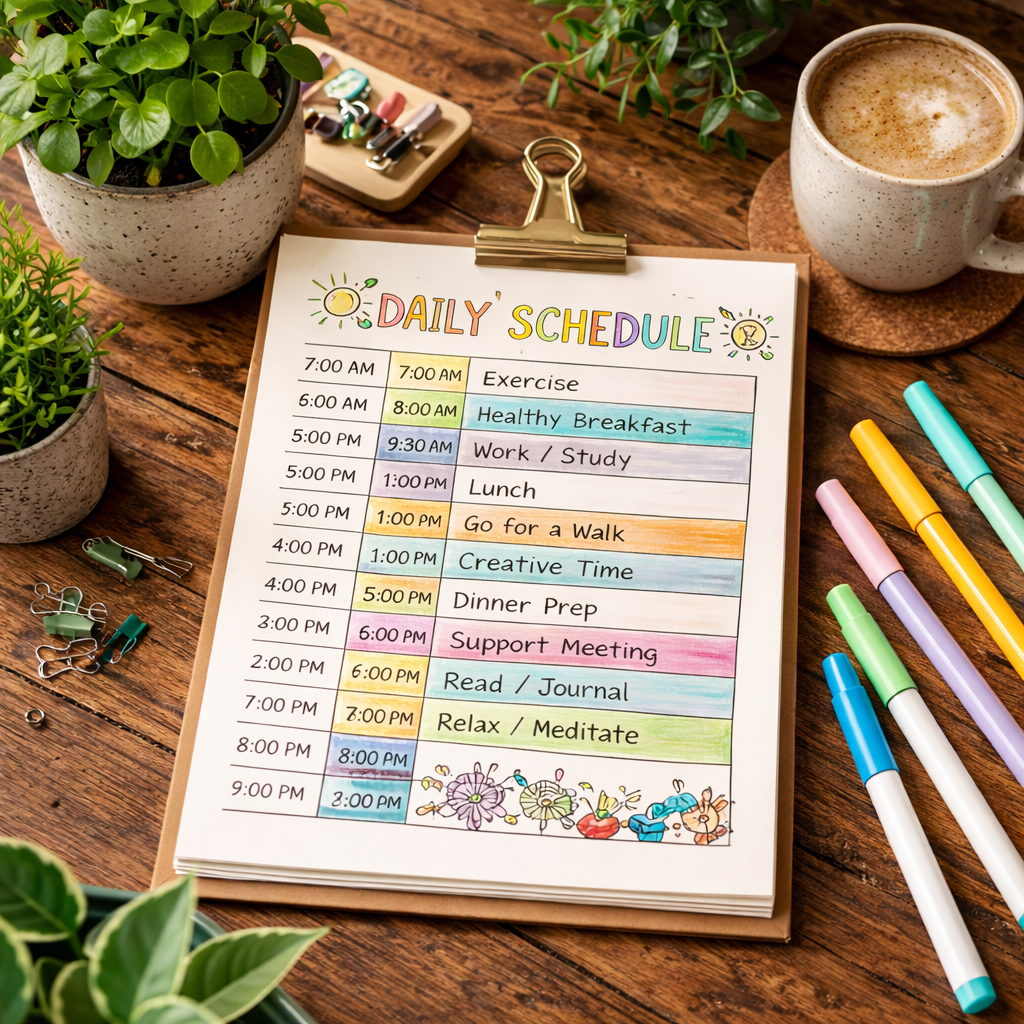
This document provides a Daily Schedule Worksheet designed to support relapse prevention by promoting structure, balance, and consistency through positive, healthy habits. It helps individuals plan their day with intention by incorporating routines that support physical health, mental wellbeing, and emotional regulation. By organizing time around constructive activities, the worksheet reduces idle periods that can increase vulnerability to cravings, impulsive decisions, or emotional distress.
The worksheet encourages mindful engagement in core self-care practices such as sleep, nutrition, physical activity, personal hygiene, medication adherence, reflection, and creative or restorative activities. It also supports accountability by helping individuals recognize patterns, build predictability, and reinforce a sense of purpose and accomplishment. Intended for daily use and regular review, this document functions as a practical tool within a relapse prevention plan—supporting stability, self-efficacy, and long-term recovery through healthy structure and routine.